

The Importance of Communication in Human History

Updated: Mar 17
Human history shows that division often grows where communication breaks down. When people stop listening, assumptions take over. Questions like how do human beings connect with each other? Why do misunderstandings escalate into conflict? These questions are as old as humanity itself.
At the core of these struggles lies the importance of communication. It is how trust is built, how fear is reduced, and how people begin to see one another beyond labels and boundaries.
Exploring the Fragility of Connection
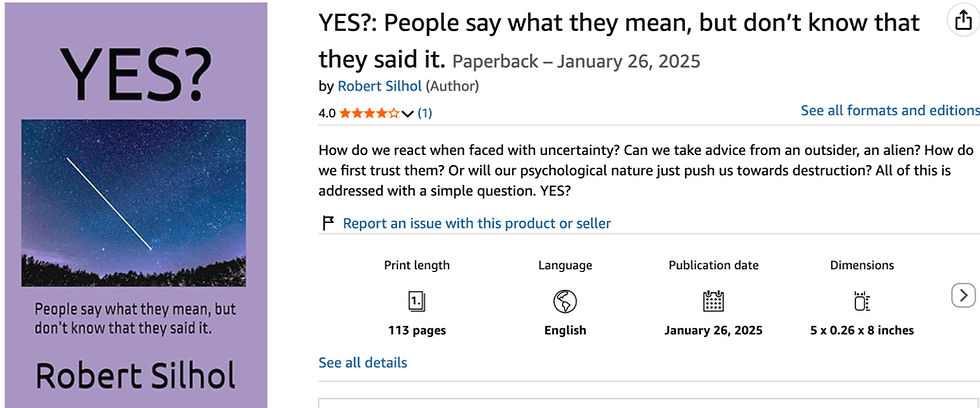
These ideas sit at the heart of YES? *People Say What They Mean, But Don’t Know That They Said It
by Robert Silhol. This science fiction story explores what happens when communication itself becomes the central event. Rather than focusing on spectacle or conquest, it presents a moment where humanity is confronted with a message it does not fully understand.
This encounter highlights how fragile human connection can be when faced with uncertainty. It shows how easily fear can overshadow dialogue.
The Role of Empathy in Communication
Communication is not only about exchanging information. It is about recognition and acknowledgment. Human beings connect with each other through words, tone, silence, and intention. When communication is honest and open, it creates space for empathy. When it is avoided, division deepens.
Across cultures and societies, conflicts often begin not because people speak too much, but because they stop truly listening.
The Impact of Misunderstandings
Misunderstandings can lead to significant conflict. They can escalate quickly, causing rifts that seem insurmountable. When we fail to communicate effectively, we risk alienating those around us. This can create a cycle of mistrust and resentment.
So, how can we improve our communication? It starts with active listening. We must be willing to hear others, to understand their perspectives. This is not always easy, but it is essential for building strong relationships.
Strategies for Effective Communication
Listen Actively: Pay attention to what others are saying. Show that you value their thoughts and feelings.
Ask Questions: Clarify any points that are unclear. This shows that you are engaged and interested.
Be Open and Honest: Share your thoughts and feelings openly. This fosters trust and encourages others to do the same.
Practice Empathy: Try to see things from the other person's perspective. This can help bridge gaps and resolve conflicts.
Avoid Assumptions: Don’t jump to conclusions. Instead, seek to understand the other person's viewpoint.
The Power of Dialogue
Dialogue is a powerful tool for connection. It allows us to share our experiences and learn from one another. When we engage in meaningful conversations, we create opportunities for growth and understanding.
In a world filled with noise, finding moments of genuine dialogue can be transformative. It can lead to deeper connections and a greater sense of community.
Conclusion: The Path Forward
As we navigate the complexities of human relationships, let us remember the importance of communication. It is the foundation upon which trust is built. It is the bridge that connects us to one another.
By fostering open dialogue and practicing empathy, we can work towards a more understanding and connected world. Let us strive to listen more, speak thoughtfully, and engage with one another in meaningful ways.
Get Emma Parker’s stories in your inbox
Join Medium for free to get updates from this writer.
Subscribe


Comments