

What If the First Alien Message Was About Ourselves?

Imagine this: Aliens finally reach out to us.

But instead of a message about their world, their technology, or their plans for Earth, the first alien message is something far stranger… a message about ourselves.
What would we do if we were confronted by a message that reflects our unconscious desires, our insecurities, and our fears?
What happens if the alien species contacting us isn’t just sending us data about their world but offering us a mirror?
One that forces us to confront what we don’t fully understand about our own emotions?
Would we be ready to face what they see in us, or would we reject their message, afraid of the truths it might reveal?
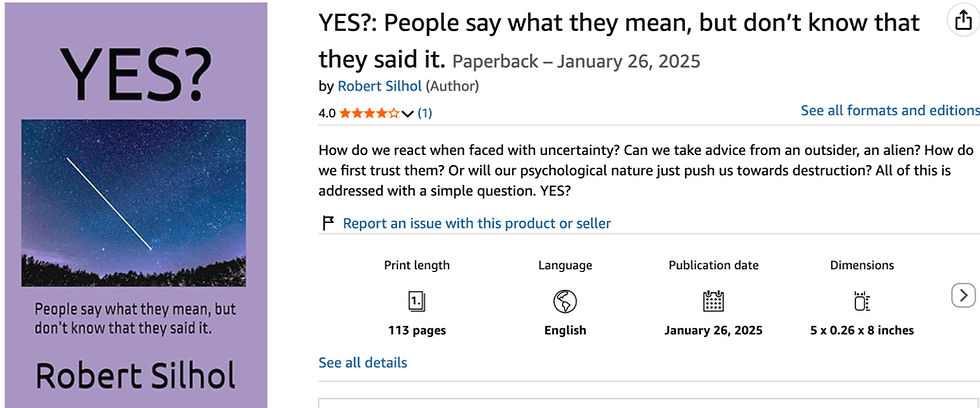
In YES?, Robert Silhol explores the idea of first contact with an extraterrestrial message that goes beyond the physical. It discusses language, the very thing that shapes how we understand the world, ourselves, and even aliens.
What if the extraterrestrial message is just a reflection of who we are? Be it our desires, fears, or the unconscious forces that guide us…
Can the Alien Contact Reflect Our Desires?
The first alien message we receive might not be about technology or science. It might be something far deeper. Could it be that alien species, when reaching out to humanity, aren’t just trying to communicate facts, but rather revealing something fundamental about us? Silhol’s YES? suggests that language isn’t just a tool for communication. It’s a look into our souls. The question isn’t “What do the aliens want?” but rather, “What does their message reveal about us?”
Facing Our Own Fears
In the novel, when YES? presents a message that forces the characters to look within. They are confronted not just by an alien species but by the darker parts of their own psyche. This presents the idea that, often, what we fear the most isn’t external. It’s internal.
What happens if we make first contact with a message that asks us to examine ourselves and our deepest fears?
Can we handle that level of self-revelation, or would we shy away from it, as we often do in real life? Read the book.


Comments